He Rarely Left Town. Then Pickleball Started the Road Trips
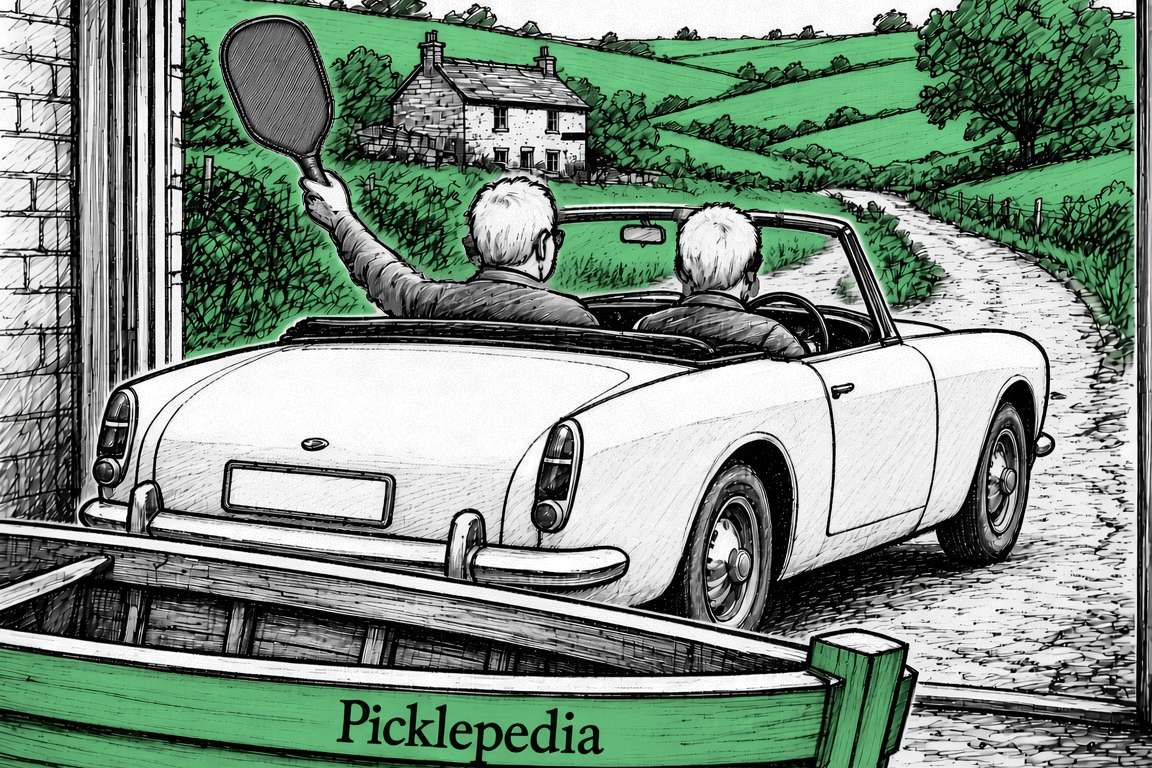
The first mornings I arrived, Charles was still in the garage. He is 72, and he lives in a small Somerset town, here in England, where he spends much of his spare time restoring an old boat. Beside it stood an old white open-top, a classic he had owned for years and rarely driven. I would stand in the doorway and watch him work the sandpaper along a wooden fitting. Outside, the light was cold and pale. He blew on his hands and went on working.
The boat is his hobby, and so is the car, though the car had barely left the garage. He has a life beyond that room: he goes dancing, and he knows people in the town. For a long time, though, he rarely left the town. He had spent his father’s final years caring for him, and afterwards, he said, he went back to the boat.
A Practical Suggestion
The change began, as he later described it, with a telephone call. It was his son, whom he had not seen in ten years. His son cannot travel, for reasons that are his own. A phone call was what they had. During the conversation, his son mentioned that pickleball was available at a local leisure centre, and that Charles might enjoy trying it.
It was a practical suggestion, the sort that does not announce itself as a turning point. I was not there for his first session. The sounds, he said, were unfamiliar, and his first attempts were tentative. He went back. Then he went back again.
I met Charles at open play. Before long I was the person he played with most. Between games we sat on the bench along the wall. I passed him his water bottle; he unscrewed the cap while the point played out. His son sent him a new paddle by post. The two could not share a court, but he brought the paddle to our sessions and went on learning.
One afternoon, between games, I asked him to come with me to a tournament in another town. He did not say yes at once. The leisure centre was familiar; a hall he had never seen, in a town he had no other reason to visit, was not. I told him we could take it as one date in the diary. He turned the idea over, as he does with a job in the garage, and then he said yes.
The Door Left Open
One morning I arrived to find him putting down the sandpaper. The white open-top was already out, the roof folded down, the paddles packed for a day away. He reached for the garage door, then stopped. Morning light reached across the concrete to the hull and the workbench. I had seen him close that door often enough. A neighbour lives across the lane. This time he let go of it and left it open, just for the day. The boat could have the light while he was gone.
He took the keys from a hook and put them in my hand, and asked if I would drive. We got in. The air was cool on our faces, with the smell of cut grass and the old leather of the seats. I turned the key. As I pulled out onto the lane, Charles lifted his paddle above the door and held it there.
What the Car Park Says
That first journey took us to a town he might once have passed without stopping. The car park was still filling when we arrived. Players unloaded kit from boots. A flask of tea sat on the bench. I watched Charles notice the other older players. The hall was much like the one where he had first tried the game. The difference was the car park, and how far the cars had come.
The next event took us further, and then another, along the M5 and the A303. After that first journey he began to take the wheel himself, a little more each time, putting miles on a car that had waited years for a reason to move. At a hall in one town, Charles fell into conversation with players waiting for their next game. In a different town, weeks later, he recognised two of them across the car park. A nod became a greeting, and some of those conversations turned to boats. On a later trip we were shown into a workshop behind a house. Another time we went out on the water with people he had first met under a sports-hall roof. Trip by trip, there were friends in places he had never had a reason to visit. The boat hobby travelled with him, and so did the car.
A filling car park on a tournament morning is a map, temporarily assembled: people who might otherwise have spent the day close to home, now in the same place at the same hour. Some of them turn out to care about the same work you already loved.
A Reason With a Date on It
Charles already had company, a boat and a car he loved. What he had not had, for a long time, was a reason to take them further than the town. A tournament weekend is less a holiday than a reason with a date on it. The hall at the other end is usually unremarkable. It needs to be far enough away that you have left, and specific enough that you cannot postpone it. For players well into later life, the world does not automatically keep offering new rooms. A fixture list does.
Watching it happen, I came to see the change more simply. Pickleball did not replace his hobbies. It combined them, and made them more fulfilling. He now drives the classic car he loves to a sport he had not tried a few years ago, and shares his boat with friends in towns he had never had a reason to visit. The garage is still his, but the bench now holds paddles and a kit bag beside the boat fittings. For a growing number of players, a new game is not a substitute for an old love. It is what takes that love out on the road.
The View Through the Windscreen
I am in the passenger seat now, travelling the Somerset lanes home. Charles is at the wheel. The windscreen frames the hedges and fields as they pass. Behind us is the paddle his son sent.
For now, he watches the road ahead. The next turn is one he knows. He takes it, and the garage comes into view with the door up; he leaves it open on travel days now. On the bench beside the boat sits a brass cleat, a gift from a friend two towns over, waiting to be fitted. The same room is waiting in a later light, and we are arriving from somewhere else.
The boat waits in the garage. It has waited before.