Who Takes the Middle in Pickleball? Simple Rules That End Doubles Confusion
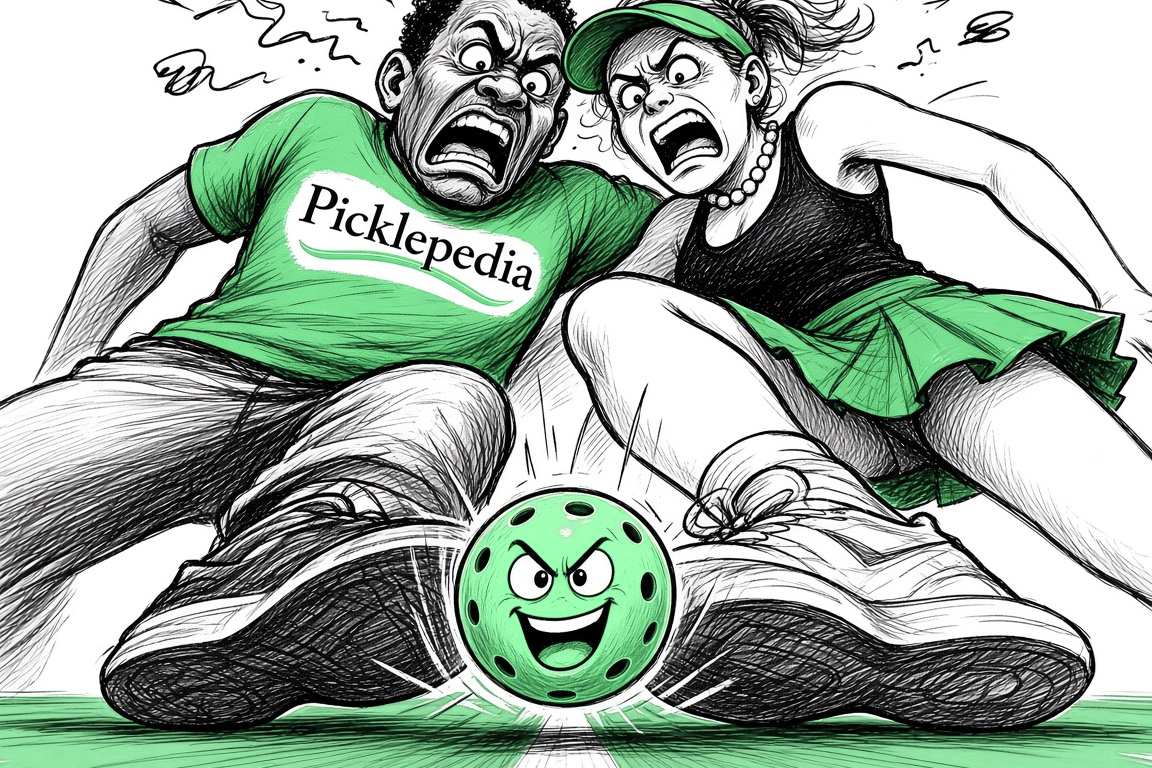
The short answer: who takes the middle in pickleball depends on a short list of agreed rules, and the most common is simple. The player with the forehand in the middle takes it, unless the ball is clearly crosscourt from the opponent who hit it, in which case the crosscourt player takes it. Whoever takes it calls “mine” early and loud.
The rulebook doesn’t decide this for you. There is no official rule about which partner must hit a middle ball, so every doubles team needs its own plan. Here is a simple one you can agree on before your next game.
Why the Middle Causes So Much Doubles Confusion
On a pickleball court, each team covers a space 20 feet wide. When both partners stand side by side, the centerline runs right between them, and a ball hit there is equally reachable by either player. That is exactly why opponents aim at it.
Two things usually go wrong. Either both players swing and clash paddles, or both players hesitate and watch the ball go by. Picklepedia’s look at the middle riddle covers why this happens even to experienced teams. The fix is not more talent. It is a decision you made before the ball arrived.
Rule 1: Forehand in the Middle Takes the Ball
For two right-handed players, the player on the left side of the court (facing the net) has the forehand in the middle. That player takes most middle balls by default. The forehand usually gives more reach, more control, and a better chance to hit down or redirect the ball.
The default changes with the team:
| Team | Forehands in the middle? | Default |
|---|---|---|
| Two right-handers | Only the left-side player | Left-side player takes the middle |
| Righty on the right, lefty on the left | Neither (two backhands) | Agree on one player, usually the stronger backhand |
| Lefty on the right, righty on the left | Both | Agree on one player, usually the stronger player or the one with a better angle |
Teams with a left-handed player often stack to put both forehands in the middle. If you want to try it, the stacking strategy guide walks through the setup.
Rule 2: Crosscourt Player Takes Angled Middle Balls
The forehand rule is a default, not a law. The second rule overrides it: if the ball comes from an opponent diagonal to you, you are the crosscourt player, and you usually take it.
Why? A ball hit from a diagonal angle travels across your body and toward your partner’s side. The crosscourt player meets it earlier and in front, while the straight-ahead partner would be reaching across and late. The straight-ahead partner’s job is to guard the sideline, the line shot that would otherwise go unguarded.
A quick way to remember it: straight ahead guards the line, crosscourt guards the middle.
Rule 3: Who Takes the Middle When the Ball Bounces
On balls that bounce, such as dinks and drops at the kitchen line, the same two rules apply, with one extra test: who can take it earlier and in front of the body? A ball you meet out front is easier to control than one you chase sideways.
When you are dinking, the player whose opponent is crosscourt is usually in the better position for a middle dink. Picklepedia’s guide to doubles positioning at the kitchen shows how partners shift together so the middle stays covered.
Rule 4: Call It Early and Commit
None of these rules work if nobody talks. Use clear, one-word calls:
- “Mine” when you are taking it.
- “Yours” when your partner should take it.
- “Bounce” or “Out” to help on balls you think are going long.
Call as the opponent makes contact, not after the ball crosses the net. Once you call “mine,” commit. If you call it and then pull out, your partner has already backed off, and the ball goes through. Teams that talk less tend to lose more, as Picklepedia’s piece on the doubles silent treatment shows.
Worked Example: A Middle Ball at the Kitchen Line
You and your partner are both right-handed and at the kitchen line. You are on the left, so your forehand is in the middle. Your partner is on the right.
- The opponent directly across from you dinks to the middle. It’s a straight-ahead ball for you and a crosscourt ball for your partner, but it is slow and centered, so your forehand default wins. You call “mine” and take it.
- Next rally, the opponent diagonal to you, across from your partner, speeds up a ball hard at the middle. Now you are the crosscourt player and your forehand is in the middle, so both rules point to you. “Mine.”
- Later, the opponent across from you hits a sharp angle toward the middle. Your partner is crosscourt and meets it out front. They call “mine,” and you slide toward your sideline to cover the line.
Notice that in every case one player called and the other moved to cover the open space. That is the whole system.
Who Takes the Middle in Pickleball on Lobs and Fast Balls?
Lobs over the middle: the player who can reach it with a forehand overhead usually takes it. If neither can, the player whose side it drops on goes back, and the partner shifts across to cover.
Hard speed-ups at the middle: there is no time to discuss, which is why the default matters. Keep your paddle up and out in front, and let the forehand-in-the-middle player react first. The speed-up is usually aimed right between you, so expect it.
A ball on the centerline itself: a ball landing on any line, including the centerline, is in. Don’t let it go and hope.
Common Mistakes When Covering the Middle
- Both players backing off. Polite partners lose more middle balls than aggressive ones. Pick a default and trust it.
- Calling too late. A call after the bounce is a guess, not a plan.
- Standing too far apart. If the gap between you is wider than your two paddles can reach, the middle is open. Move as a pair; Picklepedia’s guide to doubles formations shows the spacing.
- Forgetting the sideline. When your partner takes the middle, you shift to cover the line behind them.
- Arguing mid-match. Agree on the rules before the game. Sort out disagreements between games, calmly.
Frequently Asked Questions About Who Takes the Middle
Is there an official rule for who takes the middle in pickleball?
No. The rules don’t assign middle balls to either partner. It is a team strategy you agree on together.
Does the forehand always take the middle?
It is the most common default, but a crosscourt angle can override it. The crosscourt player is usually better placed for angled balls.
What if both partners have backhands in the middle?
Pick one player to take middle balls, usually the one with the stronger backhand, or stack so a forehand is in the middle.
What happens if the ball hits my partner?
If a ball in play hits you or your partner, your team loses the rally. That is another reason to call early.
Who takes the middle when one partner is much stronger?
Many teams let the stronger player take more middle balls, especially on speed-ups. Just make sure the weaker partner still covers their line.
Should beginners worry about the middle?
Yes, but keep it simple: forehand in the middle takes it, and always call “mine.” Add the crosscourt rule once that feels natural.
The Bottom Line on Who Takes the Middle
Who takes the middle in pickleball isn’t settled by talent or luck. It’s settled by a plan. Start with forehand in the middle, let the crosscourt player take angled balls, call it early, and cover the line when your partner goes. For the bigger picture, see the guide on how to win at pickleball.