Pickleball’s Official Partners Are Selling You Peptides. Will They Really Raise Your Rating?
November 23, 2026
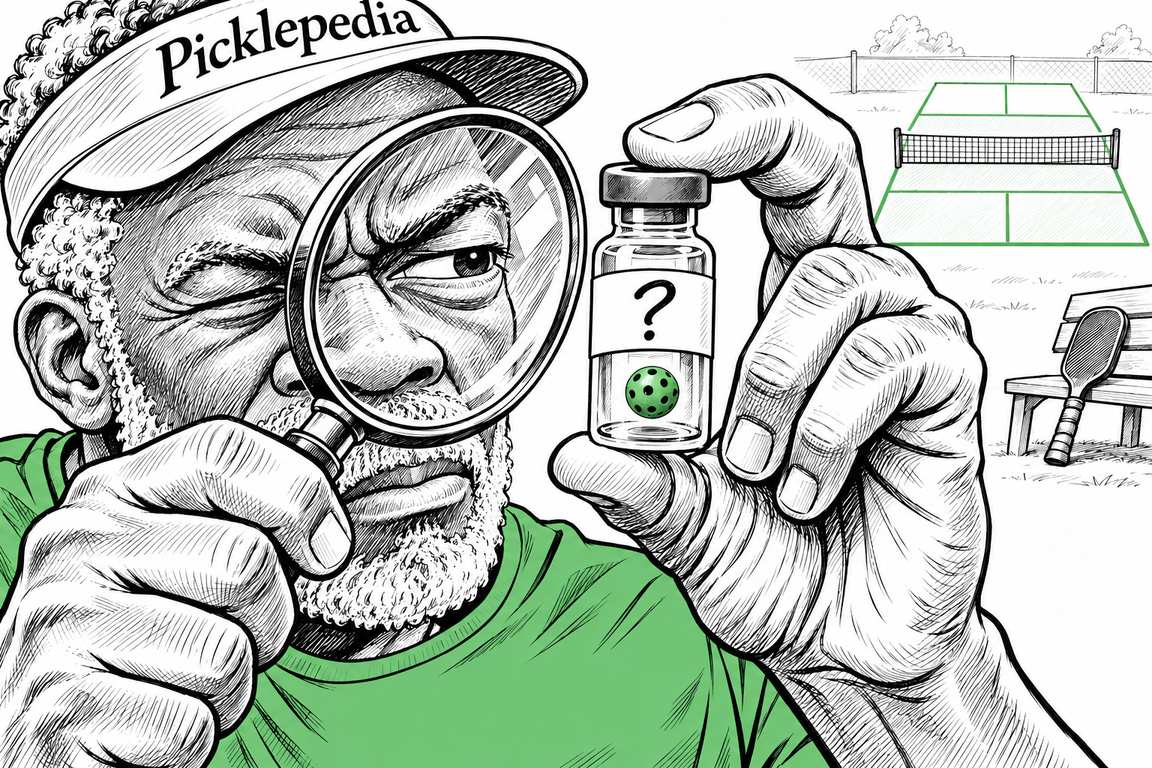
Peptides have reached pickleball’s mainstream. Even DUPR’s official partners now include a clinic offering peptide and hormone therapies.
Peptides are increasingly promoted around pickleball as a way to recover faster, stay healthier and potentially play better. But does the science support those promises?
Some peptides have produced promising results in animals. Some players report genuine improvements in pain and recovery. Yet human evidence remains surprisingly thin.
This article provides general information, not medical advice. Treatment decisions should be made with a qualified healthcare professional.
First, What Exactly Is a Peptide?
A peptide is a short chain of amino acids, the building blocks of proteins. The body naturally produces thousands of them to regulate important functions.
Peptides are not automatically experimental. Insulin and GLP-1 medications, including semaglutide, are peptide-based treatments supported by large human trials and FDA approval for specific conditions.
But those successes do not automatically transfer to peptides marketed for sports recovery.
BPC-157, TB-500, CJC-1295 and ipamorelin are being investigated or promoted for tissue repair and growth-hormone stimulation, without comparable clinical evidence.
Calling something a peptide describes the molecule. It does not establish whether it works.
Why Scientists Are Interested in BPC-157 and TB-500
BPC-157 has produced encouraging animal results. Studies suggest it may influence tendon, ligament and muscle repair through processes involving inflammation, blood vessels and healing cells.
For a player dealing with tennis elbow, Achilles pain or a stubborn shoulder injury, the appeal is understandable. Rehabilitation can take months.
TB-500 is related to thymosin beta-4, a molecule involved in cell movement and tissue repair. However, findings involving the full molecule cannot automatically be attributed to TB-500.
These are scientific leads, not established treatments.
Patients report benefits, too. A 2026 orthopedic review acknowledged growing clinical interest while emphasizing the lack of reliable human evidence. Those reporting improvements deserve to be heard.
A 2026 analysis of clinical records found a sharp rise in documented BPC-157 use between 2020 and 2025.
But feeling better after treatment does not prove the treatment caused the improvement. Rest, rehabilitation and natural healing may contribute.
What Has Actually Been Proven in Humans?
An October 2026 systematic review, searching evidence through mid-2026, found three small human studies meeting its criteria, involving 30 people altogether.
One involved 16 people treated for knee pain without a comparison group. Another studied 12 people with a bladder condition. The third examined short-term intravenous safety in two people.
Some participants reported improvements, but these studies cannot demonstrate that BPC-157 repairs injured human tendons or ligaments, or establish its long-term safety.
The reviewers concluded that BPC-157 should be used only within approved clinical trials.
| Compound | What looks promising | What remains unproven |
|---|---|---|
| BPC-157 | Animal tissue-repair studies; small human reports. | Reliable injury healing and long-term safety. |
| TB-500 | Related thymosin beta-4 research. | Human sports-injury recovery benefits. |
| CJC-1295 / ipamorelin | Small studies showing growth-hormone effects. | Faster recovery or improved performance. |
| MK-677 | Human growth-hormone-related effects. | A favorable benefit-risk balance. |
MK-677, also called ibutamoren, is not actually a peptide, although frequently marketed alongside them. In a trial involving older adults recovering from hip fractures, researchers stopped the study early following a signal of congestive heart failure among treated participants.
That does not establish identical risks for everyone. But increasing growth hormone does not automatically improve health or recovery.
No credible clinical trial has shown that these compounds improve pickleball skill or directly raise a rating. They cannot fix a third-shot drop that keeps finding the net.
If They’re Not Approved, How Can People Buy Them?
This is where things become confusing.
BPC-157 and TB-500 are widely advertised online in small vials labelled “for research use only” or “not for human consumption.” They are supposedly intended for laboratory research, not personal treatment.
Yet some consumers purchase them specifically to inject themselves. This grey market exists despite the substances lacking FDA approval for human treatment. A research label does not make a product lawful to market for human use.
Another route involves clinics working with compounding pharmacies. These pharmacies prepare medications for individual patients under specific legal conditions. Compounded medicines are not FDA-approved, and their ingredients must meet applicable requirements.
The FDA has identified potential significant safety risks involving several experimental peptides, including BPC-157. Concerns include immune reactions, impurities and limited human safety information.
Regulation has also shifted. In October 2026, the US Department of Health and Human Services introduced an interim enforcement-discretion policy covering certain substances, including BPC-157 and TB-500.
Under specific conditions, HHS said it would not take enforcement action against certain licensed pharmacies and physicians compounding these substances for individual patients. That is not FDA approval or evidence of medical benefit. The policy is conditional and can change.
The Additional Risks of Injecting at Home
Alongside clinic treatments, some players are buying peptide vials online and injecting themselves at home. Reliable figures on how common this is among pickleball players are unavailable.
There are two separate concerns.
Product and injection risks: An online vial may contain the wrong substance, an inaccurate amount or contaminants. A certificate of analysis can provide some reassurance about testing but cannot guarantee sterility or safety. Preparing and injecting products without proper sterile technique adds infection risks.
Unknown biological risks: Even a correctly manufactured peptide may have effects that tiny human studies cannot detect. Injecting without medical oversight also removes opportunities to review medications, monitor complications and decide when treatment should stop.
Sporting rules matter, too. The 2026 World Anti-Doping Agency Prohibited List bans BPC-157 and TB-500. CJC-1295, ipamorelin and MK-677 also fall under prohibited growth-hormone releasing-factor or secretagogue categories. These restrictions apply at all times.
Most recreational players are not tested, but professional and other tested athletes should know these restrictions.
A sponsor’s endorsement is marketing, not clinical evidence. The same questions apply regardless of who promotes a treatment.
Five Questions to Ask Before Considering Peptides
Anyone considering experimental peptides for an injury should consult a qualified physician, preferably one experienced in sports medicine.
- What evidence supports this treatment for my injury? Animal results may not translate to people.
- Where does the product come from? Is it prepared by a licensed compounding pharmacy with appropriate testing and a lot-specific certificate of analysis?
- What are the risks for my health history? Consider existing conditions, medications and unknown long-term effects.
- How will improvement be measured? Pain, strength, movement and return to play provide useful measures.
- When should treatment stop? Agree on reassessment dates and stopping criteria beforehand.
What Has Better Evidence for Recovery Right Now?
Progressive strength training and appropriate tendon loading remain the foundation of rehabilitation. Tendons adapt when training is matched to their capacity and increased gradually.
Collagen peptides are a separate, more modest area of interest. Unlike experimental injections, they are a food-derived protein supplement.
A 2026 systematic review covering eight trials and 257 participants, mostly men, found that collagen supplementation alongside exercise may improve tendon structure, including size and stiffness.
Those changes do not establish faster injury healing, greater strength or better performance. Training remains essential.
Adequate sleep, workload management and patience with rehabilitation also have stronger supporting evidence than experimental injections.
So, will peptides raise your pickleball rating?
There is currently no evidence that these compounds improve pickleball skill, athletic performance or ratings.
Some players genuinely report recovery benefits, and those experiences deserve respect. But any possible role for these treatments is in injury recovery under medical supervision, and even that remains unproven.
Whether recommended by a physician, clinic or pickleball sponsor, the evidence deserves the same scrutiny.
For now, improving a rating still comes down to practice, appropriate training and enough recovery to play consistently.
The science may change. Until then, players deserve to know where the evidence ends and the promise begins.