The 5 Tell-Tale Signs Your Pickleball Paddle Is Dead
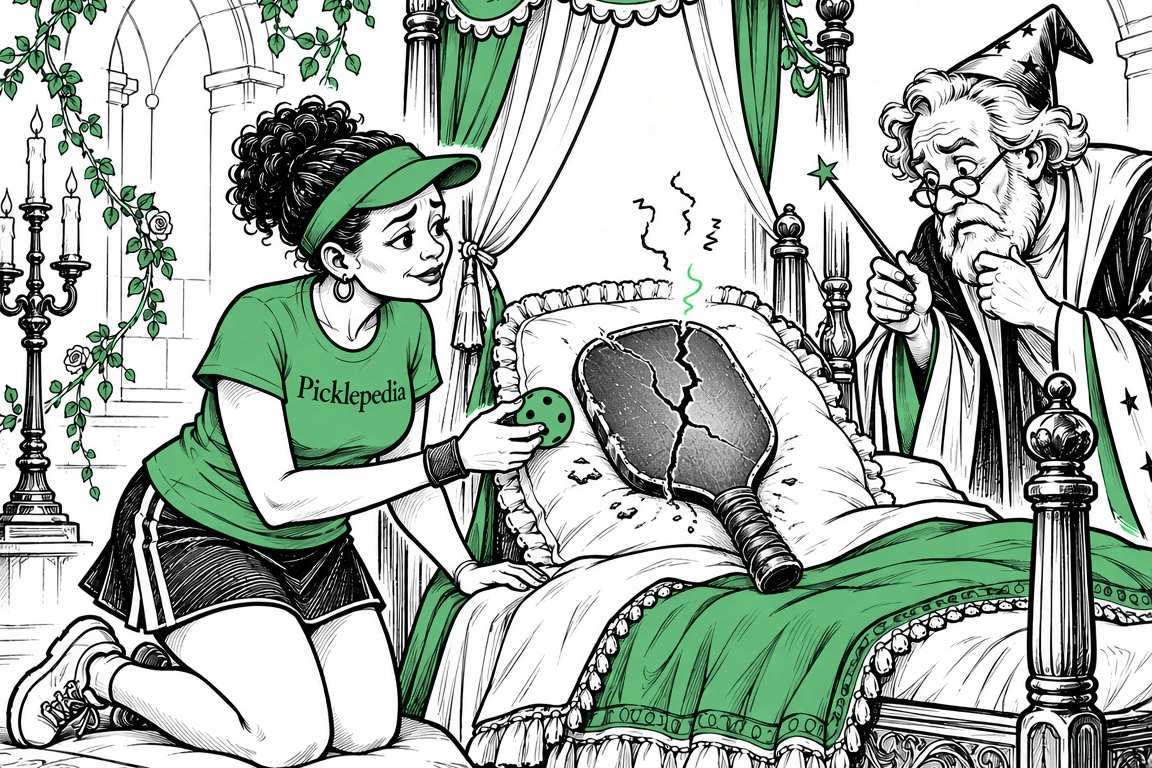
Once upon a time, your paddle had teeth. The ball grabbed the face on every roll, and your third shot drop landed as if it had read the instructions.
Then, slowly, things changed. Like the enchantments in the old fairy tales that fade by inches, a paddle rarely dies all at once. It wears out a few hours at a time, and the person holding it usually blames their own hands first.
A dead paddle rarely looks dead. It plays dead.
How fast that happens depends on how much you play and how you hit. Heavy competitive players logging 10 to 15 hours a week commonly describe a paddle feeling finished in roughly two months, sometimes sooner. Casual players often mention six months to a year or more. Those are individual accounts that vary enormously, so treat them as stories rather than replacement schedules. Court hours and playing style tell you more about wear than the date you bought the paddle.
These signs can appear separately or in any order. Here are five, moving from subtle clues to damage that’s hard to miss.
Sign 1: Your Spin Has Quietly Packed Its Bags
The first clue may show up in your shots before you notice anything on the paddle. Topspin drives float a few inches long. Your spinning dink sits up instead of kicking away.
As a paddle’s surface friction wears down, it may generate less spin. The natural response is to adjust your grip, shorten your backswing, watch three instructional videos before breakfast and briefly conclude that you have forgotten how to play pickleball.
Before you rebuild your stroke, inspect the paddle.
Resist the urge to fix it with aftermarket grit sheets, sprays or spin coatings. USA Pickleball’s equipment rules apply to all play under its rules, including recreational and league games, not only tournaments. Rule 3.D.6 lists the only alterations allowed on a certified paddle, such as edge-guard tape, weighted tape and replacing manufacturer-made interchangeable grips or faces. Grit sheets aren’t on that list. Friends can set house rules, but a modified paddle isn’t compliant.
Separately, a new spin test took effect on October 1, 2026, for paddles submitted for certification, which must measure 2,100 RPM or less.
Sign 2: The Sweet Spot Has Gone Smooth
On many textured paddles, one of the first visible changes is wear in the hitting surface, especially around the sweet spot. Clean the face first, because ball residue and dirt can make a surface feel slicker than it is. If the center still feels slicker than the edges, or you can see a shiny patch where the ball lands most often, the texture may have worn down.
Your paddle keeps a record of every shot you’ve hit, right in the middle of the face.
Some heavy players report noticeable grit loss within a few dozen hours, a fair reminder that surface texture isn’t permanent.
Sign 3: Dead Spots and a Sound That Has Changed
A dead spot is a patch of the face where the ball comes off weak and flat, as though it struck cardboard. Paddles vary in construction and sweet-spot size, so some difference across the face is normal. What matters is change. If a familiar area now sounds duller or hollow, or plays differently than it used to, pay attention.
At the kitchen line, blocks become a coin toss. Your partner gives you the look usually reserved for someone who has called the wrong score twice.
When identical swings produce different results, the paddle may be talking to you.
Sign 4: It Suddenly Has More Pop Than You Remember
Some paddles develop internal core damage or other structural changes with use. When that happens, the surprise is that the paddle may not feel dead at all. It can feel hotter. Balls jump off the face, resets float high, and the soft, plush feel it had when new is gone. Our explainer on dwell time covers why that soft feel matters.
The paddle has somehow become more powerful at precisely the moment you trust it least. Power you can’t steer will cost you more points than it wins.
Sign 5: Cracks, Bubbles and a Battered Edge Guard
Look for hairline cracks, raised or bubbled areas that may indicate separation between layers, and unusual rattling when you give the paddle a gentle shake. Check the edge guard for splits too.
A cosmetic edge-guard scuff is not the same as structural damage. Rule 3.D.5.a prohibits holes, cracks, delamination or indentations that break the paddle’s skin or surface, so a paddle with that damage isn’t compliant. If you suspect separation, have it assessed rather than relying on tape or a home sound test.
Your Two-Minute Paddle Check
These are screening tools, not proof of failure or of legality. Wipe the face clean first.
- The fingertip test. Compare the texture at the edge with the center.
- The light test. Tilt the face under a bright light and look for a shiny patch in the middle.
- The tap test. Tap a ball or your knuckle gently across the face in a grid, listening for spots that sound different from how they used to.
- The side-by-side. Compare against a known-good paddle, ideally the same model, thickness and weight. Use the same ball and swap every few shots. If the difference is obvious across several shots, your paddle becomes a much stronger suspect.
Making It Last, and Knowing When to Let Go
Heavy use and playing conditions can affect paddle condition, but wear varies by construction. Clean off residue, follow the manufacturer’s care instructions, and avoid extreme heat, like a hot car. Heavy players should read the warranty terms when they buy.
Investigate persistent changes rather than one odd session. If your paddle accepts manufacturer replacement faces, that may solve a worn surface without replacing the whole thing. Remove a paddle from rules-based play if it has confirmed prohibited damage. When performance symptoms pile up, or it clearly loses the side-by-side test, replacement starts making sense. Then find the right paddle, and if your touch needs rebuilding, our guide on how to reset in pickleball is a good place to start.
And the old paddle? If it’s sound but simply tired, it can become a loaner for friends trying the game. A cracked or delaminated one is a different story, since passing it on doesn’t fix the problem. Either way, there are other ways to repurpose your old paddle. As final chapters go, that’s a happy ending.